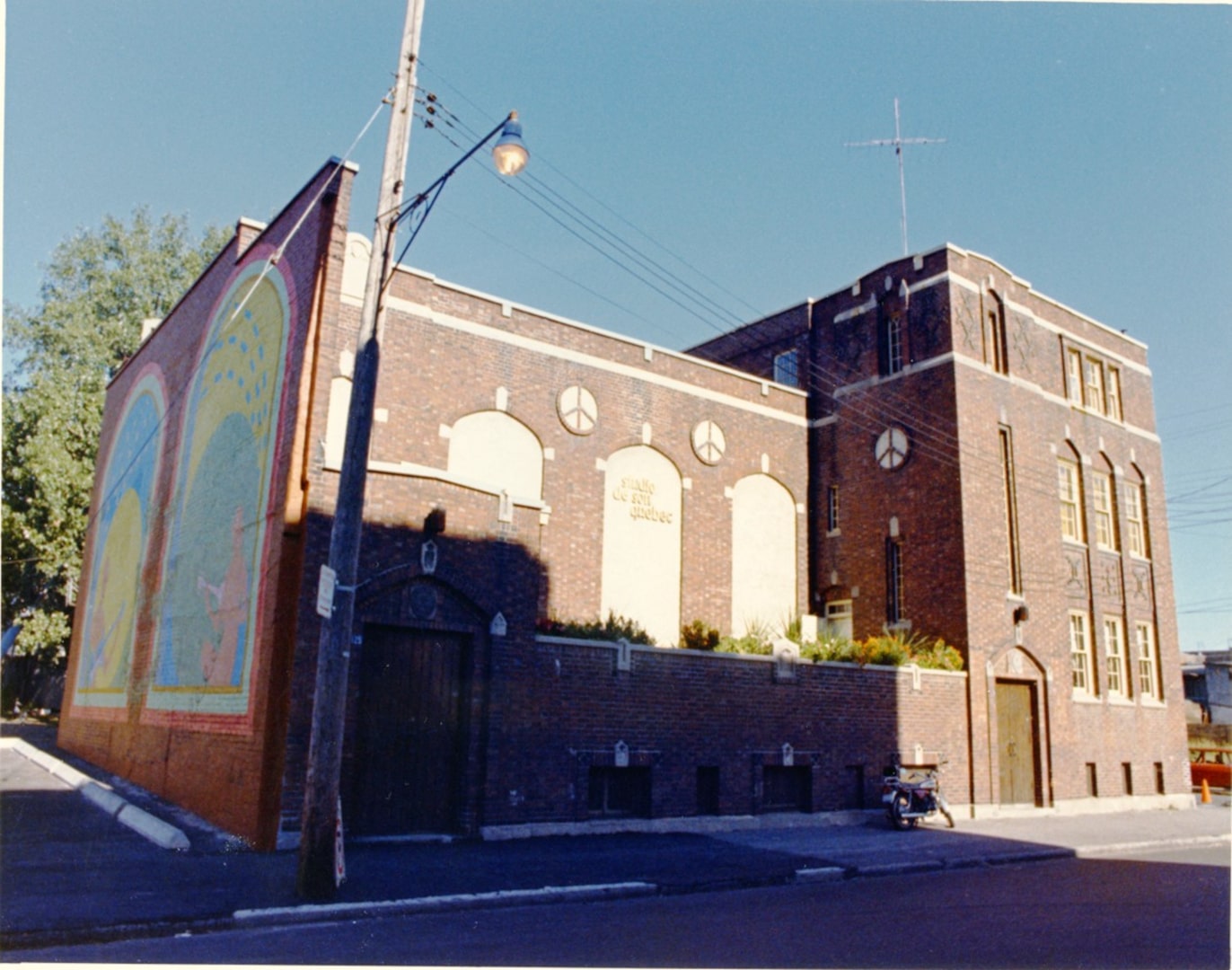
The building that housed Son Québec began its life in 1921 when the land on Rue Houle was bought from M. Zephir Gauthier by the Presbyterian Church of Canada. The Italian Presbyterian Church opened its doors in about 1923. By 1926, Houle had been renamed Amherst Square, (Carré Amherst). Not long after that, The United Church of Canada was formed from Canada’s Methodist and Presbyterian Churches, and by 1930, it had become The Church of All Nations.

Figure 1 – Lovell’s Directory, 1923
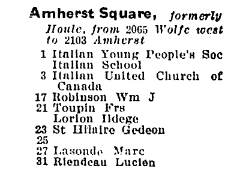
Figure 2 – Lovell’s Directory 1926
In the early 1960s, the church was closed and the congregation joined Erskine and American United Church on Sherbrooke St. W.

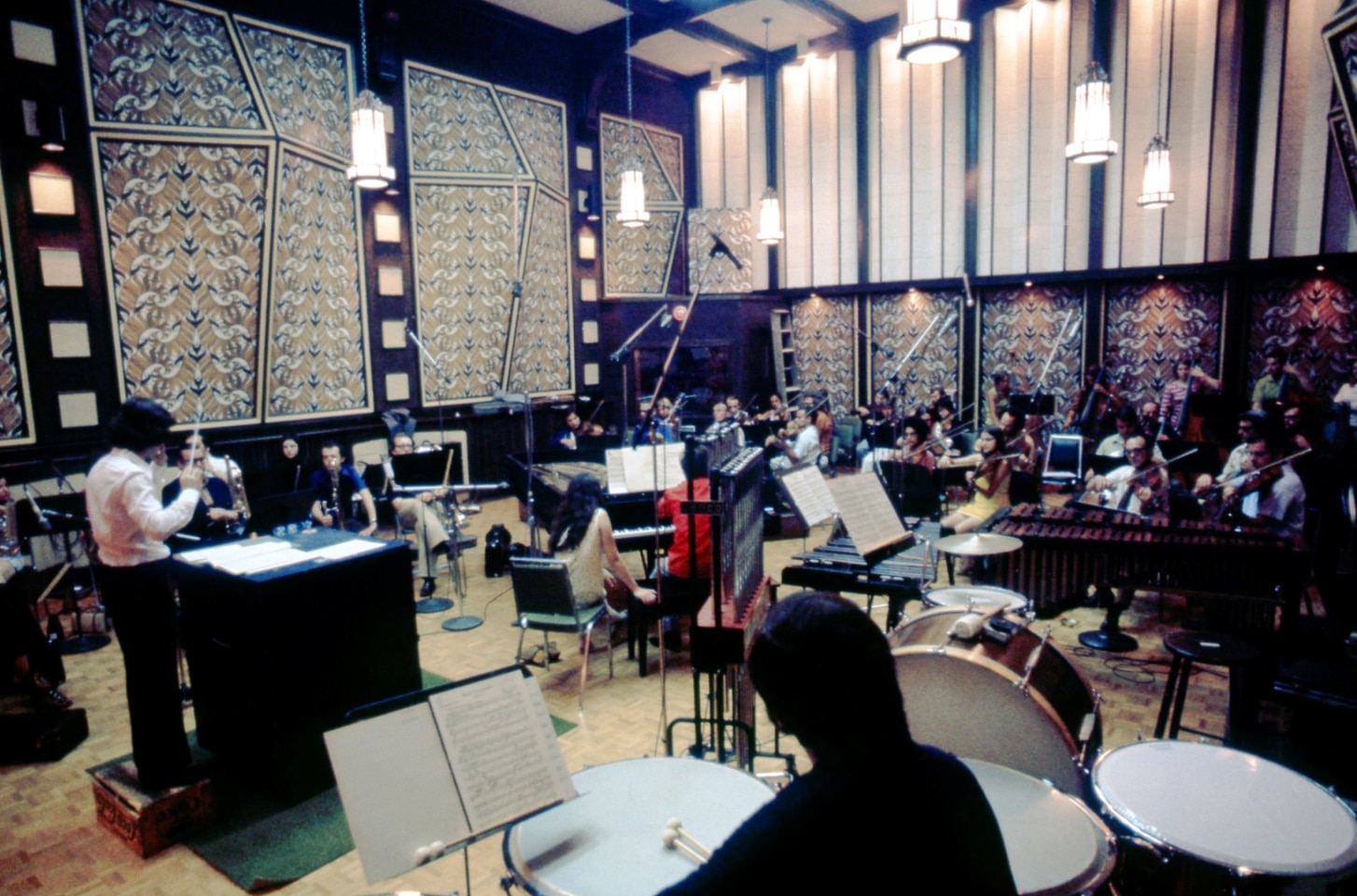
On Sept. 21, 1969, the abandoned church was sold to André Perry, who transformed it into a recording studio. The nave of the church became Studio “A”, and the chancel housed the control room. Another smaller room on the floor above became Studio “C”. On the top floor, he built an apartment for himself and his wife Yael Brandeis. It was completed in July of 1971.
In November of 1972, after less than 2 years in operation André Perry, on the verge of bankruptcy, sold his new studio at 1135 Carré Amherst to André Bruneau, a financier and amateur musician, and record producer Gilles Talbot. The studio’s name was changed to Studio de Son Québec Inc. and Bernard Dubost was appointed General Manager. The equipment remained essentially the same as in Perry’s time – Neve recording consoles, Ampex 8 and 16-track recorders. The complex housed 3 studios:
Studio “A” with room for up to 50 musicians. At the time, Studio A was the largest recording space in Montreal and the only one suited to recording such large orchestral formations. In 1974-75 the studio was equipped for 24-track recording.
Studio “C”, a medium sized 16 track room for groups of 6 to 8 musicians.
Studio “B”, a small 4-track facility was added in 1974 for commercial voice-over work.
Over the years the studio recorded albums for many major Quebec artists including Ginette Reno, François Dompierre, André Gagnon (Neiges), Jacques Laflèche, Michel Louvain, Chantal Pary, Edith Butler, Raoul Duguay, René and Nathalie Simard, Offenbach and Morse Code among others. They also recorded many radio and TV commercials, which were a mainstay of the business.
In 1977, Bernard Dubost and his wife Nicole bought the business outright and remained the owners until his retirement in 1991. At that time, he sold business to, Jean-Claude Tremblay, the owner of Les Studios Marko. It became the headquarters of one of their subsidiaries, le Groupe Modulations – an audio/video post-production house.
Recordists over the years have included Claude Demers, Ian Terry, Nelson Vipond, Michel Ethier, Pierre “Pete” Tessier, Philippe Espantoso, Tim Hewlings, Serge Gaudet and Pierre Décarie.